


.svg)






How it works
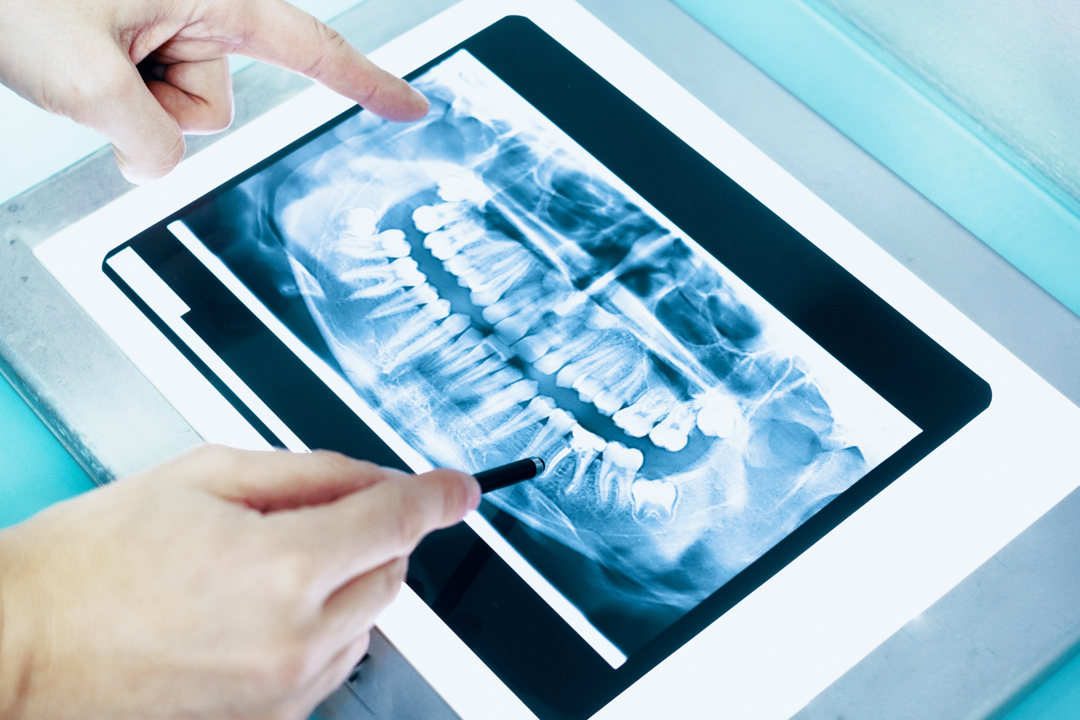
Cone Beam Computed Tomography (CBCT) is an advanced type of 3D X-ray imaging that produces detailed, high-resolution views of the teeth, jaws, and surrounding bone and soft tissues. Unlike standard two-dimensional X-rays, CBCT creates a complete three-dimensional image, giving clinicians a much clearer picture of your anatomy for diagnosis and treatment planning.
CBCT is commonly used when traditional X-rays don’t provide enough information, particularly for dental implant planning, impacted teeth, jaw pathology, orthodontic assessment, and complex surgical cases.
CBCT scanning gives your dentist, specialist or surgeon precise 3D information to help with:
- Planning and placement of dental implants
- Assessing impacted or misaligned teeth
- Evaluating bone structure, nerve canals, sinuses and jaw joints
- Detecting hidden pathology such as cysts or tumours
- Orthodontic assessment and surgical planning
- Temporomandibular joint (TMJ) analysis
- Endodontic evaluation (root canals)
- These detailed 3D images cannot be obtained reliably with conventional 2D X-rays alone.
What to expect
No special preparation is needed for a Cone Beam CT scan. You may be asked to:
- Remove jewellery, eyeglasses, hearing aids or any metal objects that could interfere with imaging
- Advise us if you are pregnant or think you might be pregnant
- You should wear comfortable clothing, scans are painless and quick.
Day of the scan
During your CBCT scan:
- You’ll be positioned comfortably either sitting or standing near the scanner.
- The machine rotates around your head while capturing detailed images.
- You’ll need to remain still for a short period, the scan itself usually takes less than a minute.
- The result is a comprehensive set of 3D images that your clinician can examine from every angle.
Frequently asked questions
Is the Procedure Safe?
Cone Beam CT is a non-invasive and pain-free imaging procedure. While it uses X-rays (a form of ionising radiation), the dose is typically much lower than a conventional medical CT scan and is only used when the additional 3D information is clinically justified. Your doctor will ensure that the benefits outweigh the radiation exposure.
After Your Scan
There are no post-scan restrictions, you can resume normal activities immediately.
The images will be reviewed and interpreted by imaging specialists, and the results will be sent to your referring clinician to assist in your diagnosis and treatment plan.
When Is CBCT Recommended?
Your doctor may request a Cone Beam CT scan for conditions such as:
- Dental implant planning and assessment
- Evaluation of jaw and facial bone
- Impacted or unerupted teeth
- TMJ disorders
- Orthodontic treatment planning
- Detection of cysts, tumours or other pathology
- Complex surgical preparation