


.svg)






How it works
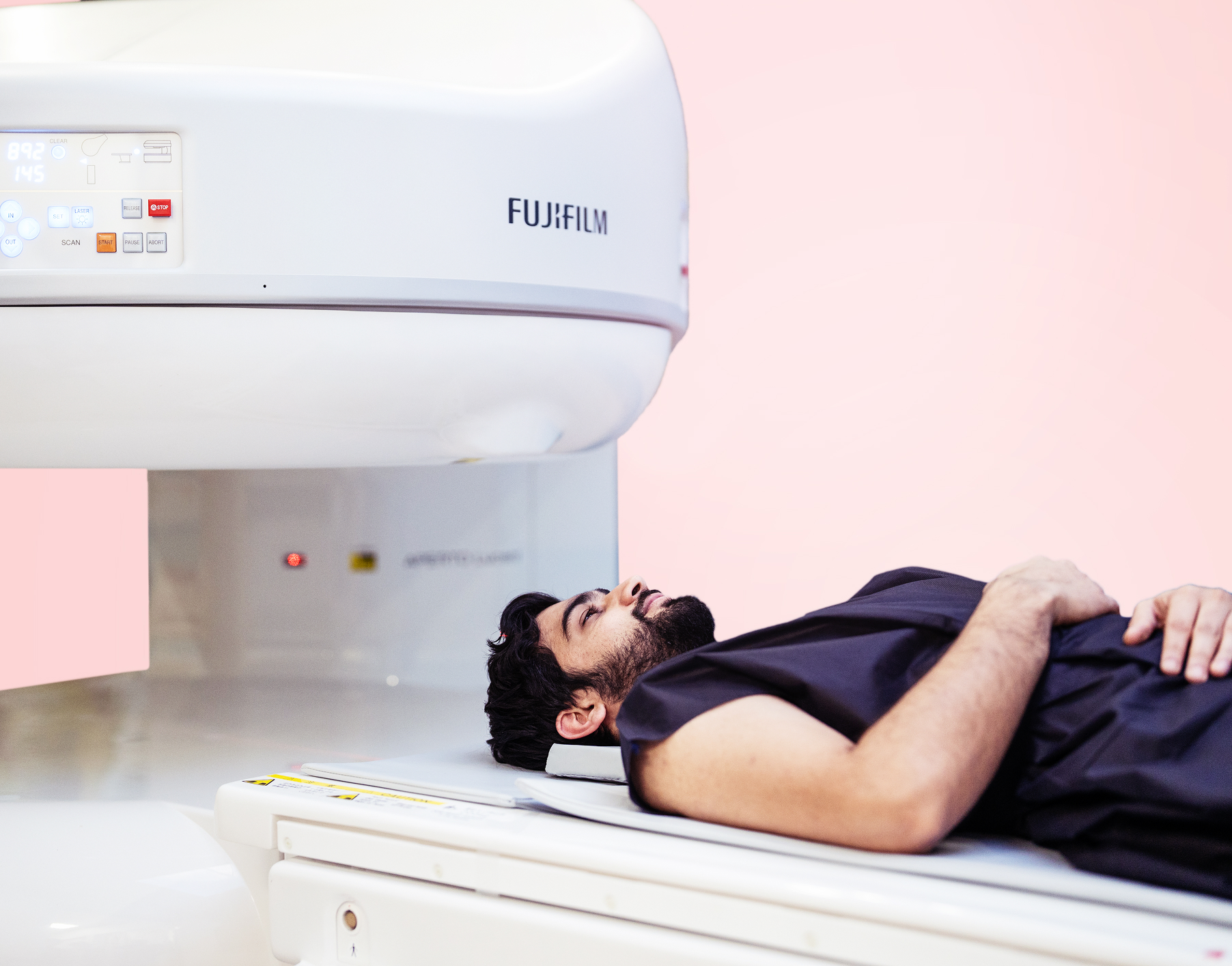
Open MRI offers a more spacious scanning environment with increased visibility and open sides. This service is currently only available at Robina Home Hub in QLD. It is ideal for patients who feel anxious or confined in traditional MRI scanners, as well as those who require additional physical space or positioning support. Open MRI can be used for many of the same examinations as conventional MRI and is commonly chosen for:
- Patients experiencing claustrophobia or anxiety
- Children or individuals who benefit from a calmer, more open environment
- Examinations where comfort or positioning may affect scan quality
What to expect
An MRI scan is generally non-invasive. The radiologist may ask the radiographer to give you an injection of contrast (Gadolinium) towards the end of the scan to collect further information.
MRI scans are loud due to switching electric currents directed through coiled electromagnets. Ear plugs or headphones are used during the scan, allowing you to listen to music. You'll also be given a buzzer to speak with the radiographer if necessary.
Day of the scan
- The night before. Drink plenty of fluids so you are well hydrated.
- Day of scan. Arrive 20 mins before appointment and bring any relevant previous imaging for comparison.
- Prior to scan. Cannula and gown.
- The MRI scan. Lie as still as possible.
- After the scan. Finalise appointment with reception.
Frequently asked questions
Am I eligible for an Open MRI?
Most patients are suitable. However, certain examinations or clinical indications may require a different MRI system. Your doctor will be able to advise.
Why might I be referred for an Open MRI instead of a standard MRI?
Open MRI is often recommended for patients who:
- Feel claustrophobic
- Have anxiety in enclosed spaces
- Need extra space for comfort
- Have difficulty lying in enclosed scanners
Is Open MRI suitable for larger patients?
Yes. Open MRI offers more space and weight tolerance than traditional closed MRI scanners, making it more comfortable for many patients.
Can you scan my entire body while I am in there?
No. The MRI scanner can scan almost any part of the body but each scan is limited to a specific area. It can take from 30-60 minutes to scan each area.
Can my child have an MRI?
Yes. MRI scans are often preferred for children as there is no radiation used. It is helpful to show your child some videos on Youtube of an MRI machine so they are aware of the loud noise and that they have to lie very still.
Why is my whole body in the scanner if you are only scanning my head?
The part of the scanner that produces images is located in the centre of the magnet, called the isocentre. Therefore, in order to scan your head most of your upper body will be in the scanner. The same is true when imaging the spine and upper extremities.
Will an MRI scan hurt?
No. An MRI scan does not hurt, and you will not feel anything during the procedure. You will be given a call button before the scan begins, which allows you to maintain two-way communication with the radiographer at all times.
Will an MRI affect my dental fillings?
No. An MRI will not cause dental fillings (when in proper condition) to loosen or come out. The metal used in most fillings is not affected by the MRI scanner’s magnetic field. However, fillings and orthodontic braces may cause minor distortion on images if the scan involves your neck, brain or facial area.