


.svg)






Proactive Bone Health Screening at Lumus Imaging
A quick guide for referring doctors.
Published on
10 Apr 2026

What is Proactive Bone Health Screening?
Proactive Bone Health Screening is an AI tool that automatically analyses routine X-Rays (chest, spine, pelvis, knee, hand/wrist) to identify patients who may have low bone mineral density (BMD) a key risk factor for osteoporosis.
If a patient’s X-Ray shows signs suggesting low BMD, RhoTM generates a proactive rating that is included with the radiologist’s findings.
Why it matters
- Osteoporosis is common but underdiagnosed
- Many patients never receive a DEXA/BMD but already have X-Rays that could reveal early signs of bone loss
- This is a proactive clinical prompt, helping identify atrisk patients earlier
How it works at Lumus
- A patient attends for any routine eligible X-Ray
- Proactive technology is automatically enabled
- If low BMD is likely, a proactive suggestion is added to the report
The referring doctor can then decide to support:
- Clinical Fracture Risk Assessment (CFRA)
- DEXA/BMD bone density scan
- Bone health management plan
What you will see in the report
A Proactive Score (6–10) indicating the likelihood of low BMD.
Higher scores = higher likelihood.
When is Proactive screening automatically engaged?
- Patient is 70 years of age or older
- No Lumus Imaging DEXA scan in the past 2 years, or proactive recommendation in the last 6 months
- Medicare eligible
RhoTM AI is used to identify patients at higher risk of disease before symptoms appear, so they can be prioritised for earlier or more frequent screening.
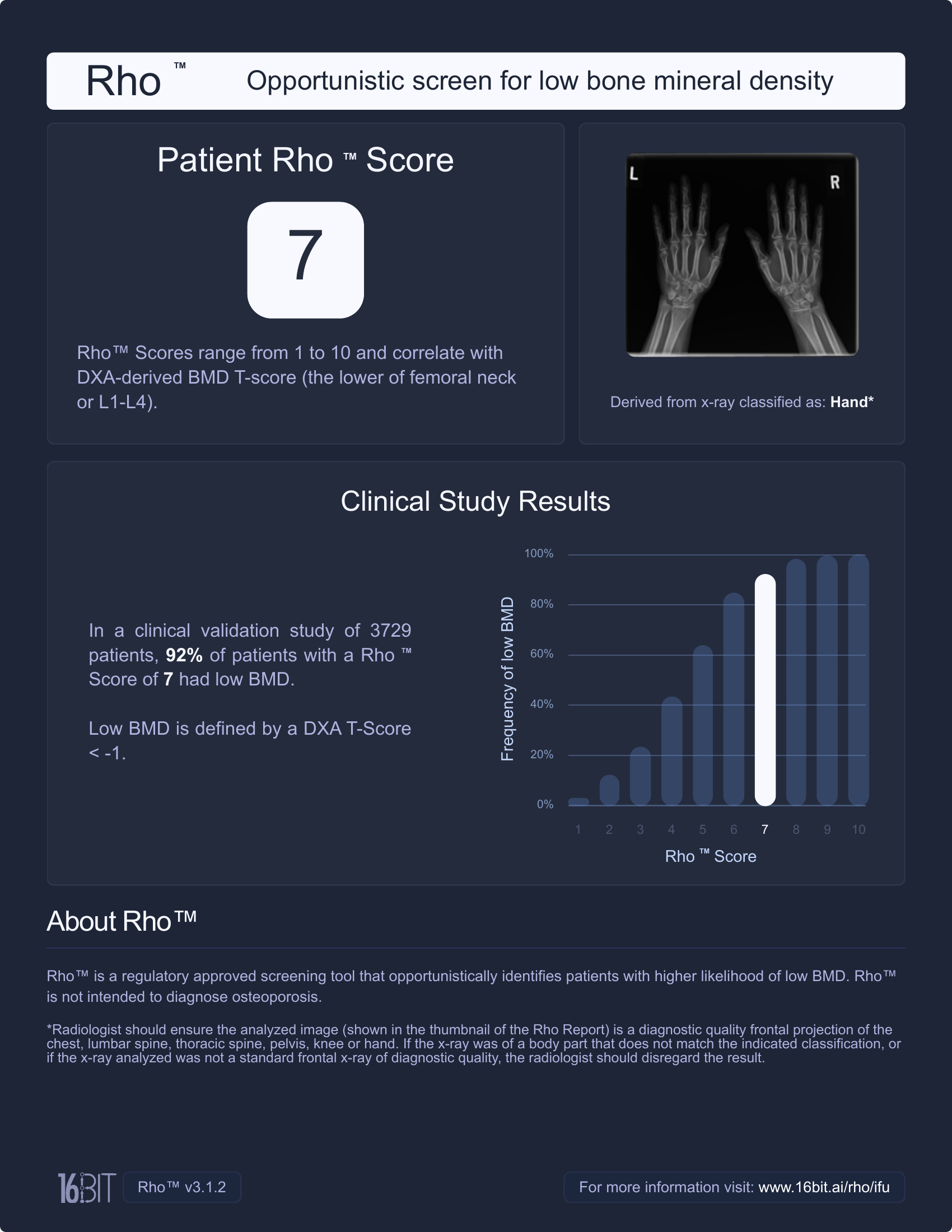
RhoTM score to % Likelihood table as per the product’s clinical validation study:
*DEXA confirmed osteopaenia/osteoporosis
Copy Report
Proactive screening assessment of this Chest X-ray by the 16-BIT Rho AI model predicts a Rho Score of 6 which correlates to an 85% likelihood of the patient having low bone density. Formal assessment with DEXA should be considered.
Share this post